


Failed or Missing DPC
Many older homes have no damp-proof course, or an original slate or bitumen DPC that has broken down over the years.

Specialist rising damp treatment starts with proper diagnosis. We confirm whether you really have rising damp, install a new damp-proof course and replaster where needed, all backed by a 10-year insured guarantee.
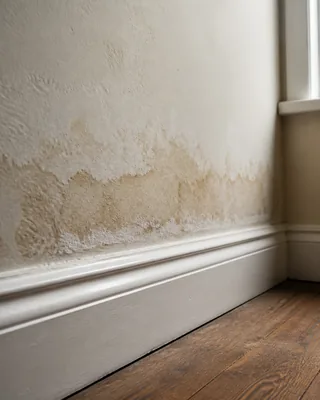
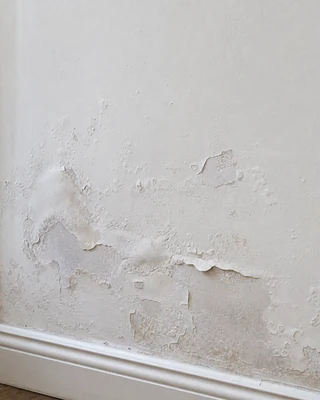
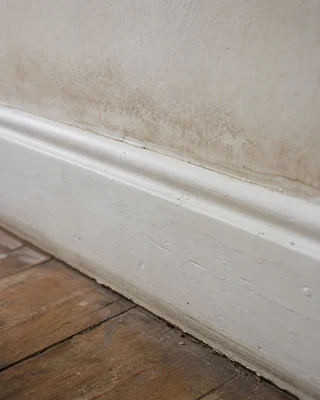
Rising damp is ground moisture that travels up through a wall by capillary action when the damp-proof course (DPC) has failed, been bridged or was never fitted. It carries ground salts into the plaster, leaving tide marks, spoiling decoration and, in time, rotting nearby timber.
It is often confused with penetrating damp or condensation, so an accurate diagnosis matters. Our CSRT-qualified, Property Care Association (PCA) registered team carries out a free survey, confirms the true cause and treats only what is needed. Call 01933 825246 for honest, local advice.
Many older homes have no damp-proof course, or an original slate or bitumen DPC that has broken down over the years.
Raised garden or path levels, external render or plaster touching solid floors can bridge the DPC and let moisture cross it.
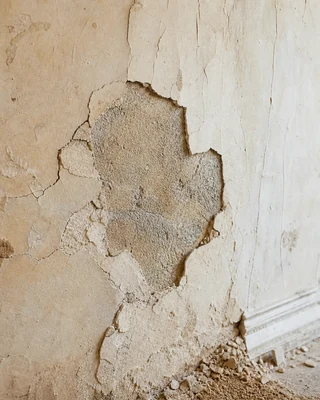
Rising moisture draws hygroscopic ground salts into the plaster, which keep attracting moisture until the wall is replastered with specialist plaster.
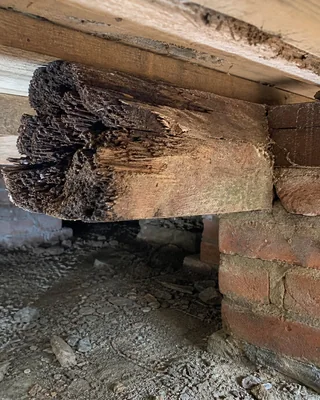
We inject a silicone-based DPC solution into the mortar bed or masonry to form a new, continuous water-repellent barrier.
Contaminated plaster is removed and renewed with a salt-resistant system, so walls dry out and stay clean.
Completed work comes with full documentation and a 10-year insured guarantee for your peace of mind.
We inspect the affected areas and discuss what you have noticed.
We identify the cause and explain the findings clearly.
Our team completes only the remedial work your property needs.
You receive the relevant documentation and long-term guarantee.
Local, honest advice, starting with a free survey.
Rising damp is ground moisture that rises up through a wall by capillary action when the damp-proof course has failed, been bridged or was never installed. It typically leaves tide marks up to around a metre high, along with salt deposits and damaged plaster.
The usual causes are a failed or missing damp-proof course, a DPC bridged by raised ground or render, or debris in the wall cavity. A survey confirms which applies to your property.
We install a new chemical damp-proof course by injecting a silicone-based cream into the mortar bed, then renew any salt-contaminated plaster with a salt-retardant system so the wall can dry and stay clean. The work is backed by a 10-year insured guarantee.
There is no fixed price, as it depends on the number of walls affected and the amount of replastering needed. We provide a free survey and a clear written quotation so you know the cost before any work begins.
A correctly installed chemical damp-proof course typically lasts 20 to 30 years or more, and ours is backed by a 10-year insured guarantee.
Not always. Penetrating damp and condensation are often mistaken for rising damp. Our CSRT-qualified surveyors diagnose the true cause first, so you only pay for the treatment you actually need.
Trevor has just recently completed a damp and woodworm survey on my home (as part of a home buy/selling process). Trevor came around within a few days following my request for an assessment and was highly knowledgeable and professional. He then produced a report which was informative and helpful. Would recommend.

Very impressed with the service. The inspection was thorough and the advice was detailed and useful.
I was very impressed with this company. They carried out damp proofing and replastering, and although I knew it might be messy work, the house was kept clean throughout and the team were polite and friendly. I would not hesitate to recommend.

We will confirm whether it is rising damp and recommend the right treatment for your home.


